The Origin of ISVS

In 1999, the University of Depok in Indonesia launched a seminar titled the international seminar on vernacular settlements. The seminar was intended to bring together scholars who were looking into numerous aspects of the relationships between built-form and culture. Inspired by the seminal book House Form and Culture by Amos Rapoport, and awed by the variety of house forms that had come into being among various tribal communities in Indonesia, the organizers led by Prof. Gunawan Tjahjono, the then professor of architecture of the University of Indonesia intended to explore the multi-faceted manifestations of vernacular beliefs and practices in the buildings and settlements they inhabited. Since then, ISVS has become a movement having organized 13 conferences across the world.

The Seminar Going Around the World

After having had three seminars; one at the University of Indonesia again in 2004 and one at the Catholic University of Parahyangan in Bandung in 2006, it truly became an international one when it was hosted by the CEPT University, Ahmadabad, in India in 2008. Prof. Pratyush Shankar from Ahmadabad became its secretary spearheading the movement. Subsequently, it has held seminars in Sri Lanka (2010), North Cyprus (2012), Turkey (2014), Makassar in Indonesia (2016), Bali, Indonesia (2018), Bhopal in India (2020), Vadodara in India (2022) and Silpakorn, Thailand (2023). University of Moratuwa, SriLanka hosted the ISVS 13 in 2024 while TDTU University in Vietnam hosted the 2025 event.

ISVS - The International Society for the Study of Vernacular Settlements Comes into Being
In 2013, the International Society for the Study of Vernacular Settlements was established with all the participants of the previous seminars and every new seminar becoming de-facto members of the society. Dr. Ranjith Dayaratne, from Sri Lanka who was attending all the seminars from its inception was instrumental in organizing the International Society for the Study of Vernacular Settlements (ISVS) which has also initiated the publication of the ISVS e-journal. Prof. Ranjith Dayaratne is therefore also its life-time president. ISVS is currently operating under the purview of Asian School of Knowledge (ASK) headed by Prof. Ranjith Dayaratne.
Redefining Vernacular
The definition of Vernacular has been revisited since the keynote Speaker, Dr. Peter Kellett from Newcastle, UK, delivered the keynote speech at ISVS-05 in Sri Lanka, arguing for the inclusion of contemporary settlements as part of the vernacular, deviating from the narrow definition of vernacular as being things of the past, the rural settlements or the tribal villages in remote places of the earth. ISVS thus promotes examining all the vernacular practices from the historical vernacular to the contemporary modern world.
The Variety of Vernacular Studies
The outcomes have been profoundly illuminating the nuances of meanings everyday communities ascribe to their living spaces and settlements and how they are fashioned by religious and personal beliefs as much as climate, culture, technologies at hand and the politics of existence. The wide variety of these studies examine the geo-physical contexts, tribal, ideological and religious beliefs, cultural variations, material manifestations and symbolic representations of everyday environments.
ISVS e-journal Comes into being
Following these new developments and the productive contributions of the ISVS members, ISVS launched the ISVS e-journal in 2013. By 2023, it was scopus indexed Q1, and was leading the journals related to vernacular studies. It is currently being evaluated by Web of Science for indexing.
Inspirations from the Giants
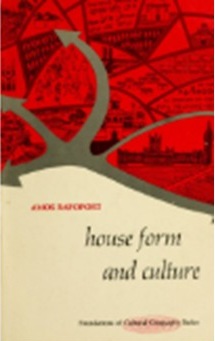
Undeniably, these studies have been inspired by the book 'House Form and Culture' of Amos Rapoport and the nuanced ideas presented in its thesis, as much as other erudite scholars such as Paul Oliver who published the Encyclopedia of Vernacular Architecture of the World, among many others. In so doing, these studies have reached academics across the world, across geographical and linguistic boundaries as well as the multi-faceted social, cultural and political contexts inspiring research that examine the nuances of meanings that manifest through people-place transactions in the lived-world. Simultaneously, they also unravel new theoretical ideas that have surfaced through the investigations and the discussions. In 2024, ISVS celebrated this with a chapter in the book: Theorizing Built-form and Culture - The Legacy of Amos Rapoport, demonstratig how ISVS has carried forward the ideas of Amos Rapoport. Today, ISVS continues to do so.
A Tribute to Prof. Gunawan Tjahjono
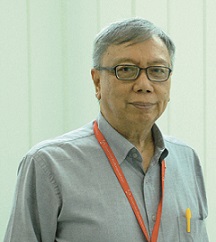
This movement pays its tribute to Prof. Gunawan Tjahjono, one time professor of architecture of the University of Indonesia, who initiated that small seminar in 1999. His fellow advisors and researchers have subsequently carried his mission through to its gigantic accomplishments to-date and continue to do so. Undeniably, Prof. Tjahjono is a visionary who has led the Asian academia and his legacy will live on forever through the ISVS seminars and the ISVS e-journal.
ISVS-15 at Kathmandu University in Nepal in Dec 2026
As said, ISVS has travelled across the world from Indonesia to India, to North Cyprus, Turkey, Makassar, Bali, Bhopal, Navrachna, Thailand, Sri Lanka and Vietnam, and continues to do so. in 2026, ISVS-15 will be hosted by Kathmandu University at its most recently established International Centre for Interdiciplinary Heritage Studies (ICIHS). We look forward to seeing you there.
Click here for the ISVS-15 Site with Details
Access Kathmandu University Web Announcement here
For any inquiries, please contact Ranjith Dayaratne at ranjithd1@hotmail.com or ranjithdayaratne@gmail.com